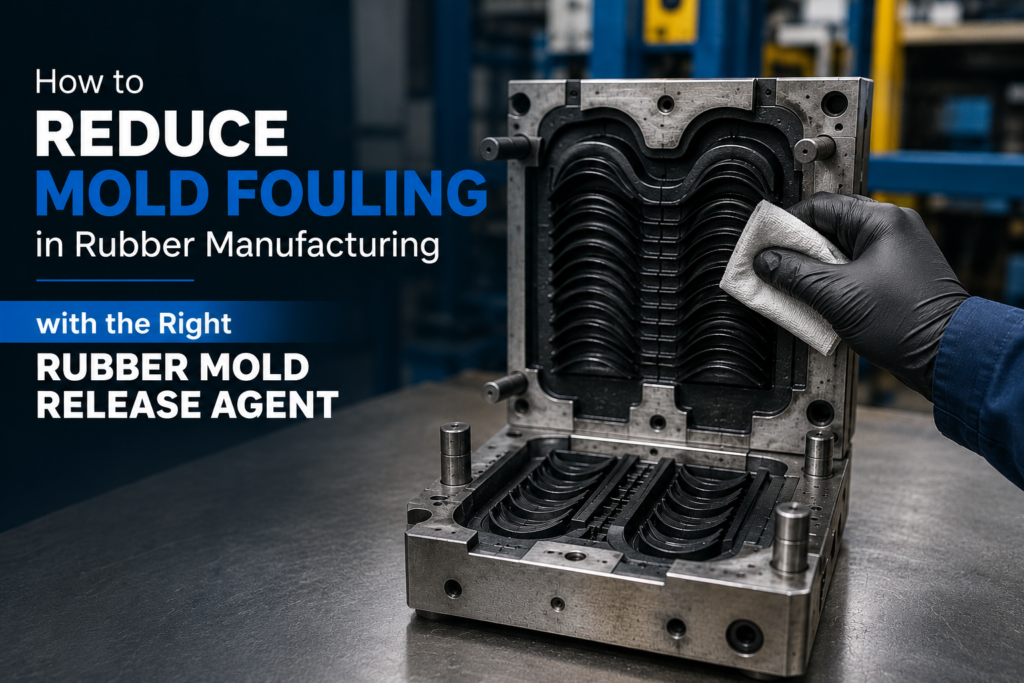
One of the most common challenges faced in rubber manufacturing is Mold fouling. Rubber compounds, processing additives, and release agent residues tend to build up on the mold surface.
This creates deposits that will affect product quality and efficiency in production. Choosing the right Rubber Mould Release agent is the key to minimizing fouling, thereby helping to maintain consistent production.
Mold fouling can lead to critical issues like defective parts and frequent cleaning cycles that can increase downtime, thereby also increasing manufacturing costs. We can significantly reduce the mold fouling by adopting the right combination of materials, process controls, and high-performance release agents.
What Causes Mold Fouling?
Mold fouling occurs when pollutants collect on the mold during repeated molding cycles.
There are several factors that contribute to this concern:
Molds lose their smooth surface because of the continued buildup of deposits, which makes it more difficult to release finished parts. A reliable Rubber mould release agent can improve the mould cleanliness by helping to reduce these deposits.
One of the first steps in reducing mold fouling is evaluating the rubber formulation. The possibilities of certain processing additives and excessive plasticizers migrating to the mold surface during curing are very high.
Working with optimized rubber compounds that minimize additive migration can significantly reduce deposit formation while maintaining the finished product’s required physical properties. Combining the same with a high-quality Rubber Mould release agent, manufacturers can achieve cleaner moulds and longer production runs.
Using a high-quality release agent plays a major role in preventing mold fouling. Poor-quality products often leave excessive residue behind, creating layers that attract additional contaminants.
Modern semi-permanent and water-based Rubber Mould release agent solutions are designed to create a thin, durable coating on the mould surface. This reduces direct contact between the rubber and the mold while minimizing residue buildup over multiple molding cycles.
Proper application is equally important. Applying only the recommended amount helps maintain consistent release performance without creating unnecessary deposits. Canadian manufacturers benefit from selecting locally compliant, environmentally friendly release agents that meet industry standards.
It is essential that stable processing parameters are maintained to help prevent excessive fouling. Manufacturers should always monitor:
Overheating, under-curing, or inconsistent molding conditions can accelerate residue building and shorten the interval between mold cleanings.
Pairing optimized processing conditions with a trusted Rubber Mould release agent can ensure better performance and reduced fouling.
Instead of waiting until heavy deposits appear, establish a preventive maintenance schedule. Routine inspection and light cleaning remove contaminants before they become difficult to eliminate.
Regular maintenance provides several benefits:
Using non-abrasive cleaning methods also helps preserve the mold’s polished surface and enhances the effectiveness of your Rubber Mould release agent in Canada.
Specialized mold coatings can further reduce fouling by creating a low-energy surface that resists adhesion of rubber compounds and contaminants.
These coatings make it harder for residues to stick, allowing molds to remain cleaner for longer production runs while reducing manual cleaning frequency. When used alongside a premium Rubber Mould release agent, manufacturers can significantly improve operational efficiency.
Reducing mold fouling is not achieved through a single solution. It requires a combination of optimized rubber formulations, proper release agents, stable molding conditions, preventive maintenance, and advanced mold surface technologies.
For manufacturers seeking reliable performance, investing in a high-quality Rubber Mould release agent is a critical step. By addressing these aspects together, rubber manufacturers can extend production runs, enhance product consistency, reduce cleaning downtime, and lower overall manufacturing costs. A proactive approach to mold maintenance ultimately leads to higher productivity, better product quality, and more efficient manufacturing operations.