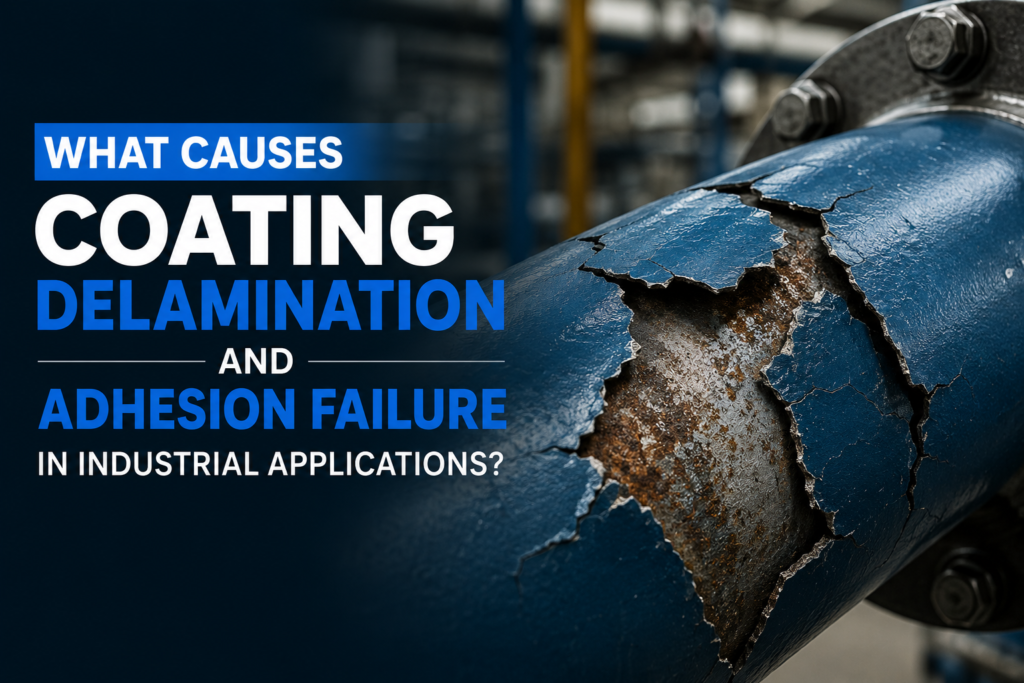
Have you ever faced a scenario where the coating that looked amazing on the first day starts peeling off in later weeks? Yes, that’s delamination. And honestly, it’s one of the most annoying problems in the coating world.
Let’s talk about why it actually happens.
You Didn’t Prep the Surface Properly
This one reason can be the foremost cause of all delamination problems. Imagine having residues of oil, rust, dust, or even oil paint sitting on the surface.
If that’s the case, then your new coating will have nothing solid to hold onto. Will you be able to stick a tape on a dusted wall? Well, this seems just like that. Expect it to hold for a day or two, but after that, it is going to fall. The key is to ensure that the surface is cleaned regularly and properly, degreased, or even roughed up if that’s what is required.
You Picked the Wrong Coating
Can this be a reason for the Delamination? Check if you have picked the right coating, as not all coatings are built for every job.
A coating that needs to be used for indoor use will give up if it’s exposed to the constant sun and UV that’s outdoors. Similarly, a coating that is rated for light chemical contact will definitely not be suitable ot be used in a plant that deals with harsh solvents.
Don’t set yourself up for failure from day one by using the wrong product for the environment.
Moisture Snuck In
Moisture is one element that can easily sneak in. It generally gets trapped under the coating even before you apply it.
It can also creep in later on if the coating has not cured properly. Moisture breaks the bond between the coating and the surface beneath.
This especially happens in humid areas. It can also happen if the coating is applied soon after the cleaning process of a wet surface.
Something went wrong during the application.
Coating can fail if it’s not put on properly. If the coating is too thick, too thin, or even at the wrong temperature, it makes a huge difference.
Do not rush the curing time, and coatings need time to set. Skip this one common mistake, and you are basically inviting problems.
Temperature Changes Are Working Against It
Another factor that can cause delamination and adhesion failure is the change in temperature. Metals are bound to expand and contract according to the heat and cold.
If the coating is not able to flex along with this change in temperature, then stress builds at the point where they meet.
This stress can turn into cracks and lifting, especially on elements that heat up and cool down over and over again.
A Little Contamination Goes a Long Way
A lot of industrial coatings deal with oils, acids, cleaners, or release agents daily. If the coating isn’t actually made to handle that specific chemical, it starts breaking down from the inside, way before you ever see anything on the surface.
Even a small element of contamination can cause delamination. It can be dust floating around or oil on someone’s gloves that regularly touches the surface during application.
Summary
Most coating failures happen due to a handful of things. It can be a bad surface prep, trapped moisture, temperature stress, chemical exposure, or just plain contamination. Preparing the surface the right way is the key, along with picking a coating that suits the environment. Always follow proper application steps, and your coating will do its job without falling apart in a few months.